“The Unity of Morality and the Economy: Economics and Management Symposium in Osaka” Held—100th Anniversary Commemorative Event
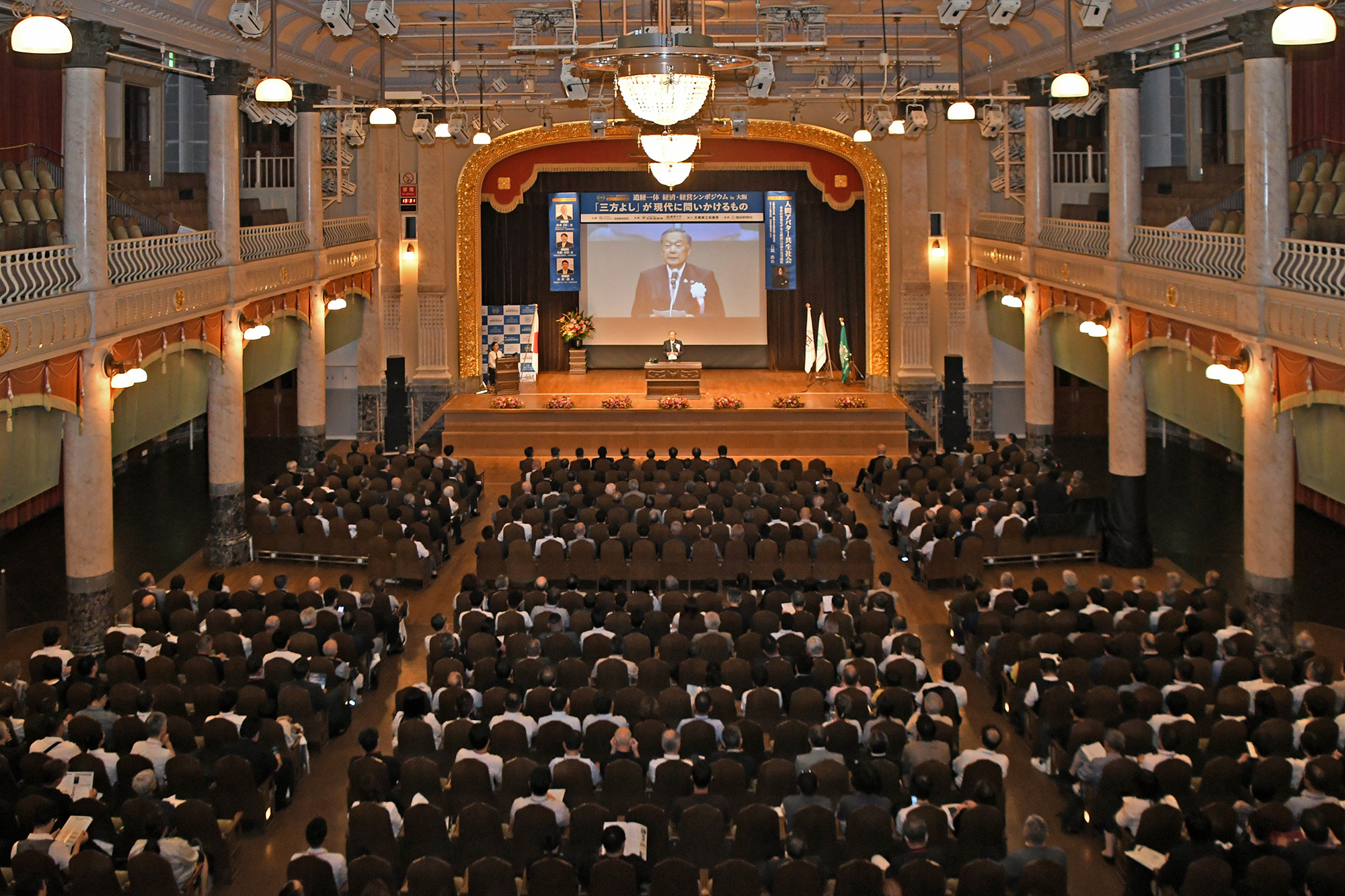
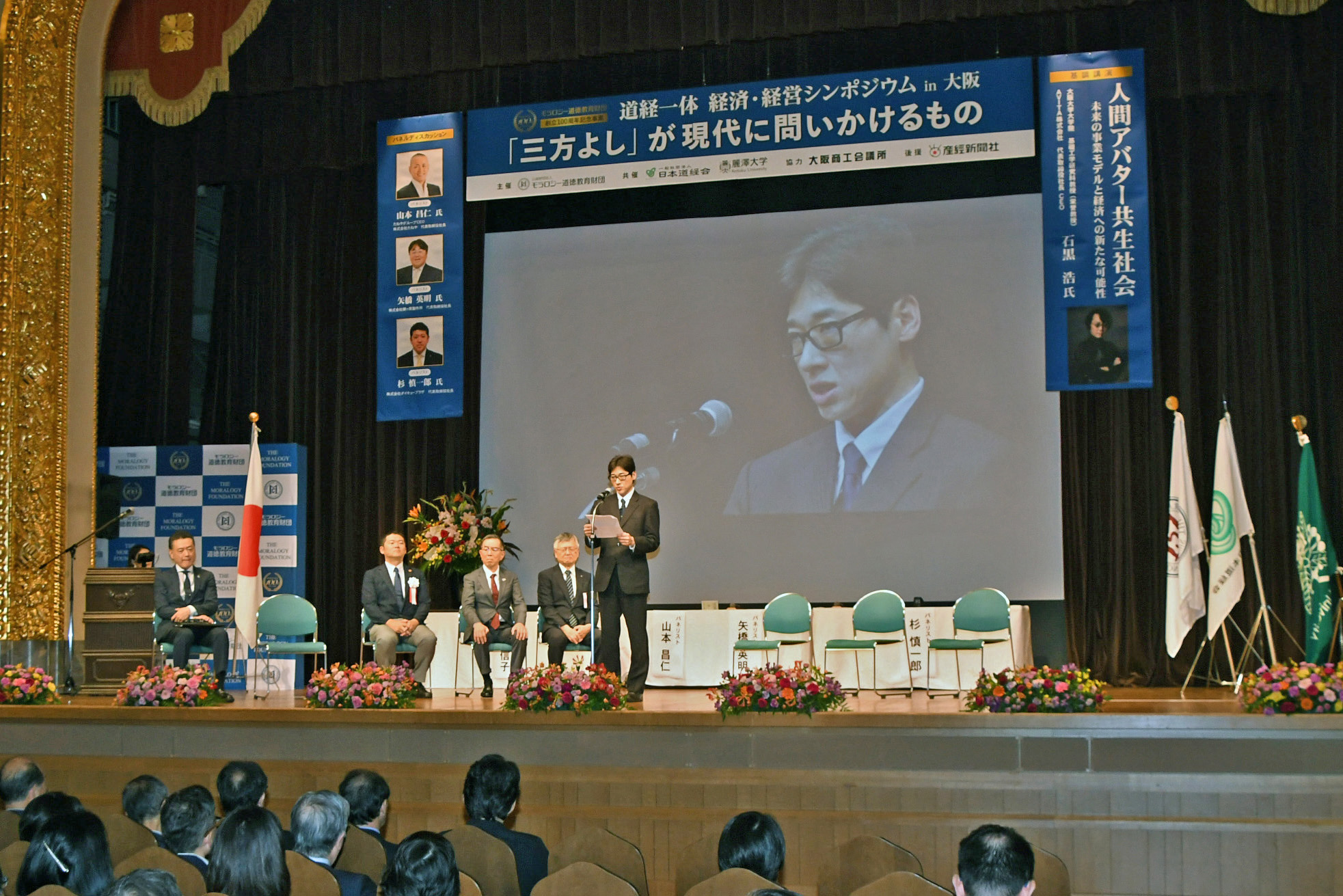
As part of its 100th-anniversary commemorative events, The Moralogy Foundation held the “The Unity of Morality and the Economy: Economics and Management Symposium in Osaka” on Saturday, September 19, at Osaka City Central Public Hall in Nakanoshima, Kita Ward, Osaka. (Co-hosted by Nihon Dohkei kai and Reitaku University; in cooperation with the Osaka Chamber of Commerce and Industry; supported by THE SANKEI SHIMBUN.)
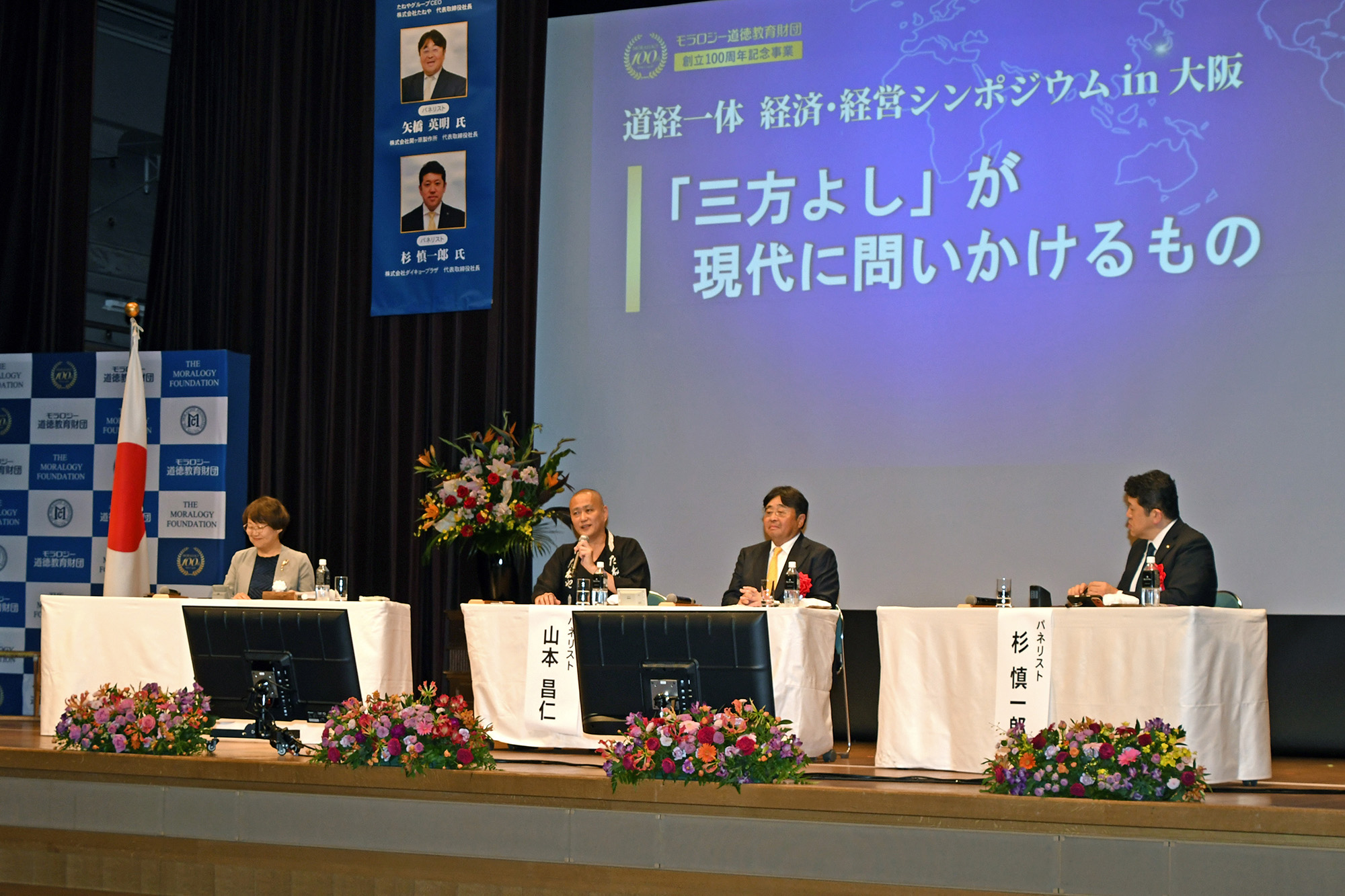
This symposium was the third installment in a series following the “The Unity of Morality and the Economy: International Symposium in Taiwan” held in September of the previous year and the “The Unity of Morality and the Economy: Economics and Management Symposium in Tokyo” held in January of this year. Held under the theme “What ‘Sanpō Yoshi (Benefit for All Three Parties Involved)’ Asks of Us Today: Seeking the Well-Being of Oneself, the Other Party, and Third Parties,” the symposium was attended by approximately 560 participants, including corporate executives and business leaders.
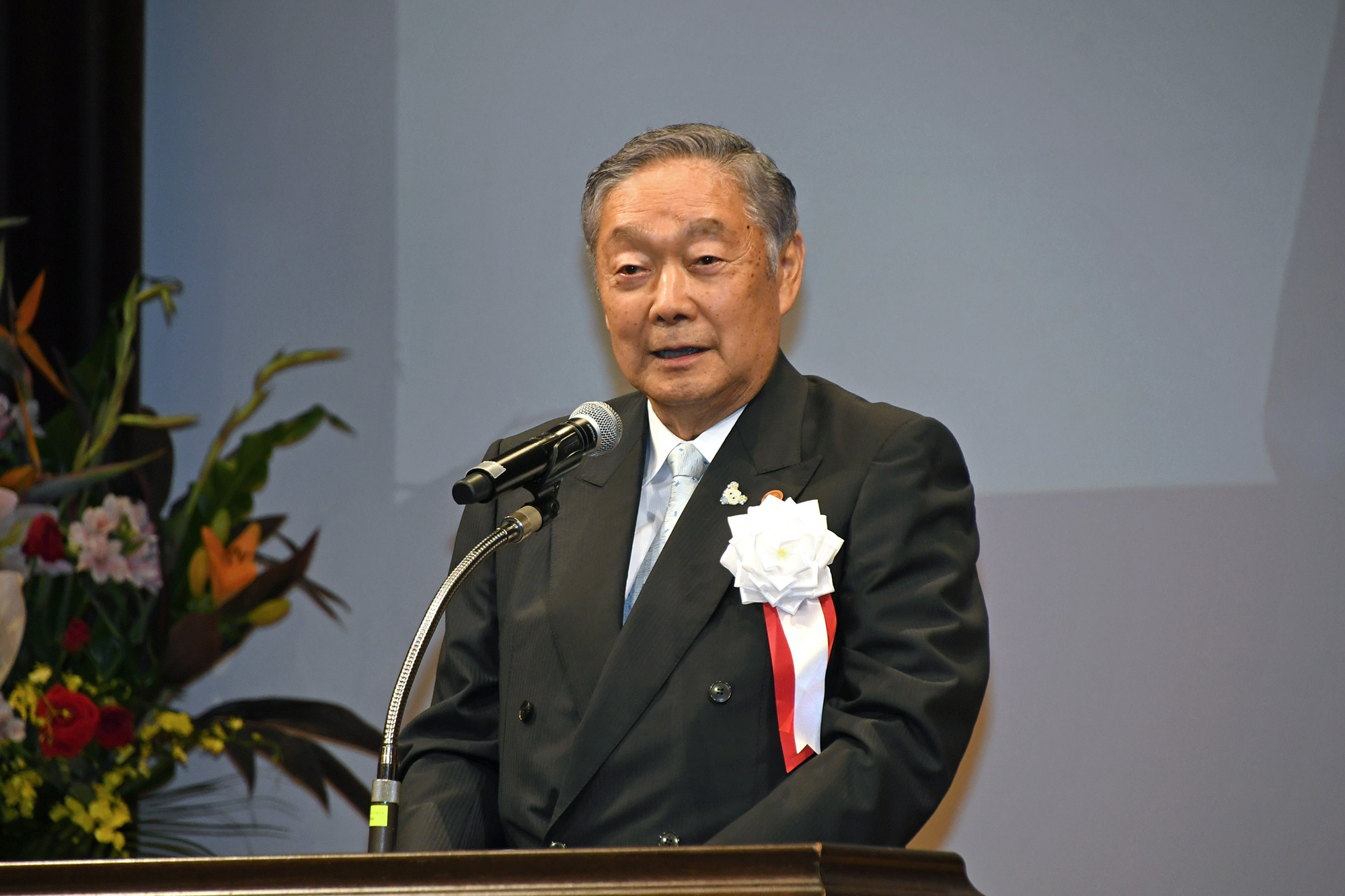
At the opening, Chairman Mototaka Hiroike delivered the organizer’s address. He introduced the fact that in September 1931, the Foundation’s founder, Chikuro Hiroike, gave a lecture in Osaka on the theme of “Rebuilding the Business World Through Morality.” He explained that the lecture took place amid the Showa Depression and generated a significant response among the business community in the Kansai region.
He further emphasized that, in order to properly utilize advanced science and technology, including AI, it is increasingly necessary to cultivate higher levels of humanity. Stating that the 21st century is truly the “Age of the Mind” and the “Century of Life,” he stressed the importance of “following one’s divine mission while doing one’s utmost in human affairs.” Furthermore, as the Foundation reached its 100th anniversary, he reaffirmed the significance of “Dou-Kei Ittai (The Unity of Morality and the Economy),” “Sanpō Yoshi,” and “Moral Character Capital,” and expressed his determination to contribute to “building a nation through human resource development” and “passing on this legacy to the next generation.”
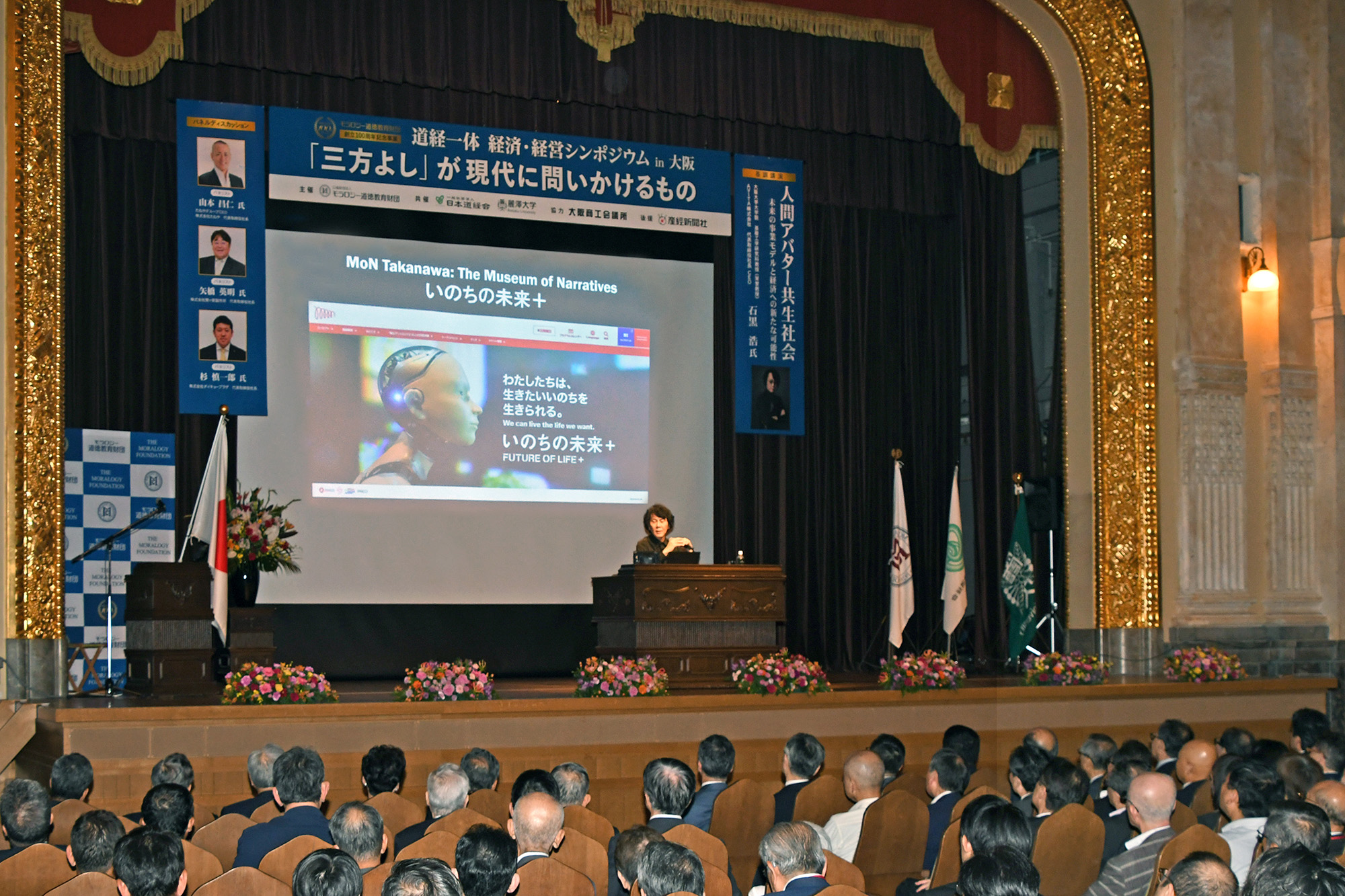
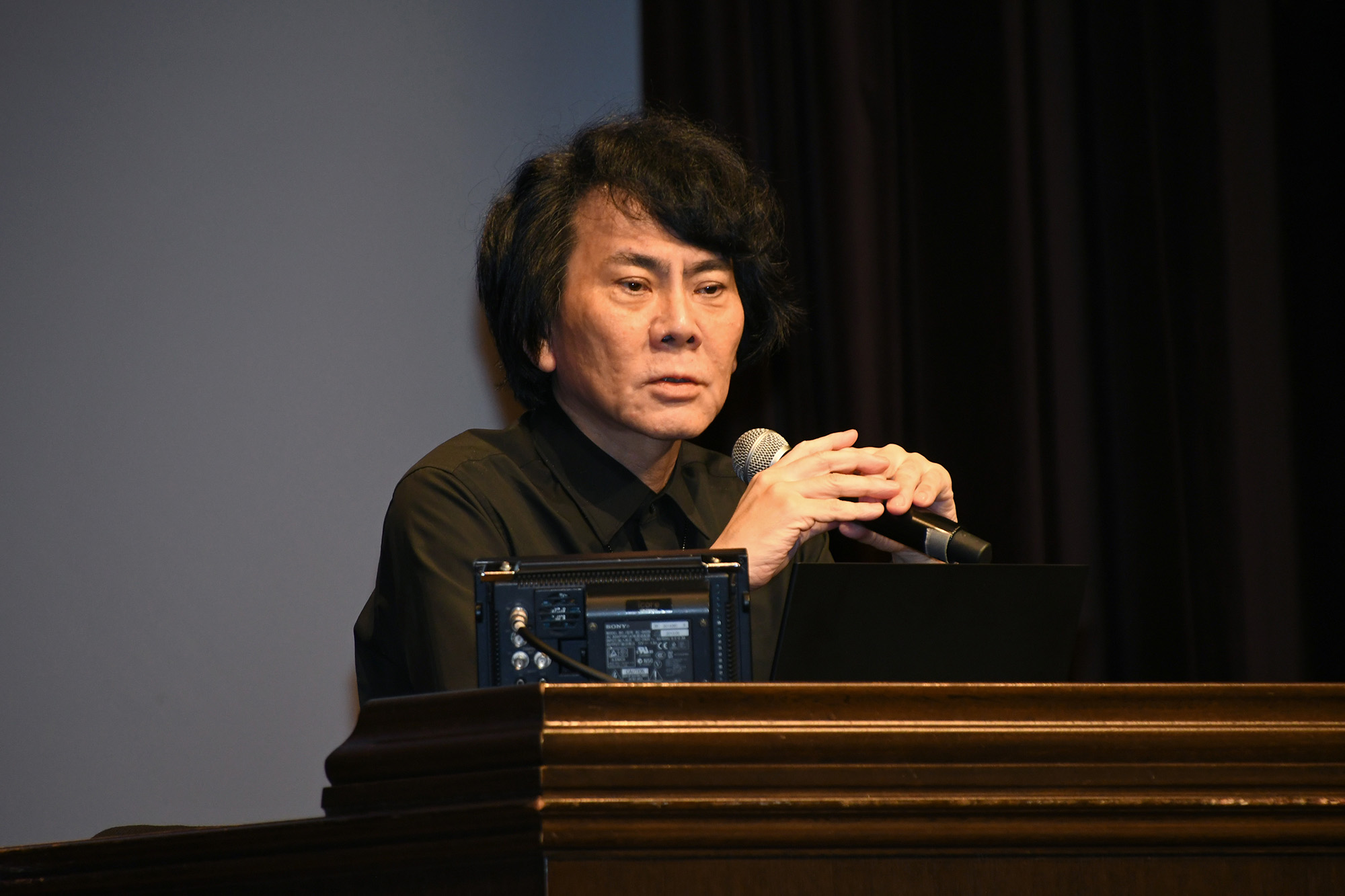
For the keynote address, Professor Hiroshi Ishiguro, a leading authority in robotics and Theme Project Producer for the Expo 2025 Osaka, Kansai, Japan (Professor at the Graduate School of Engineering Science, Osaka University; President and CEO of AVITA, Inc.), took the stage to deliver a lecture titled:
“A Society of Human-Avatar Symbiosis: Future Business Models and New Possibilities for the Economy.”
Professor Ishiguro introduced examples from the Expo pavilion “Future of Life,” which he produced, as well as his latest research on avatars. He defined an avatar as “something operated remotely by a person” and explained that it is a robot that moves according to human intentions.
He further demonstrated that realizing a society in which avatars and humans coexist could free people from constraints of time and space, enabling everyone—including elderly people and people with disabilities—to participate in diverse social activities.
He also introduced examples of applications in fields such as telemedicine, education, and employment support, explaining that avatar technology can “eliminate discrimination based on physical bodies and help realize a society of diversity and inclusion where everyone recognizes, connects with, and lives together.”
Furthermore, he discussed how technology can help address social challenges such as population decline and expand human potential. Participants listened attentively to his presentation.
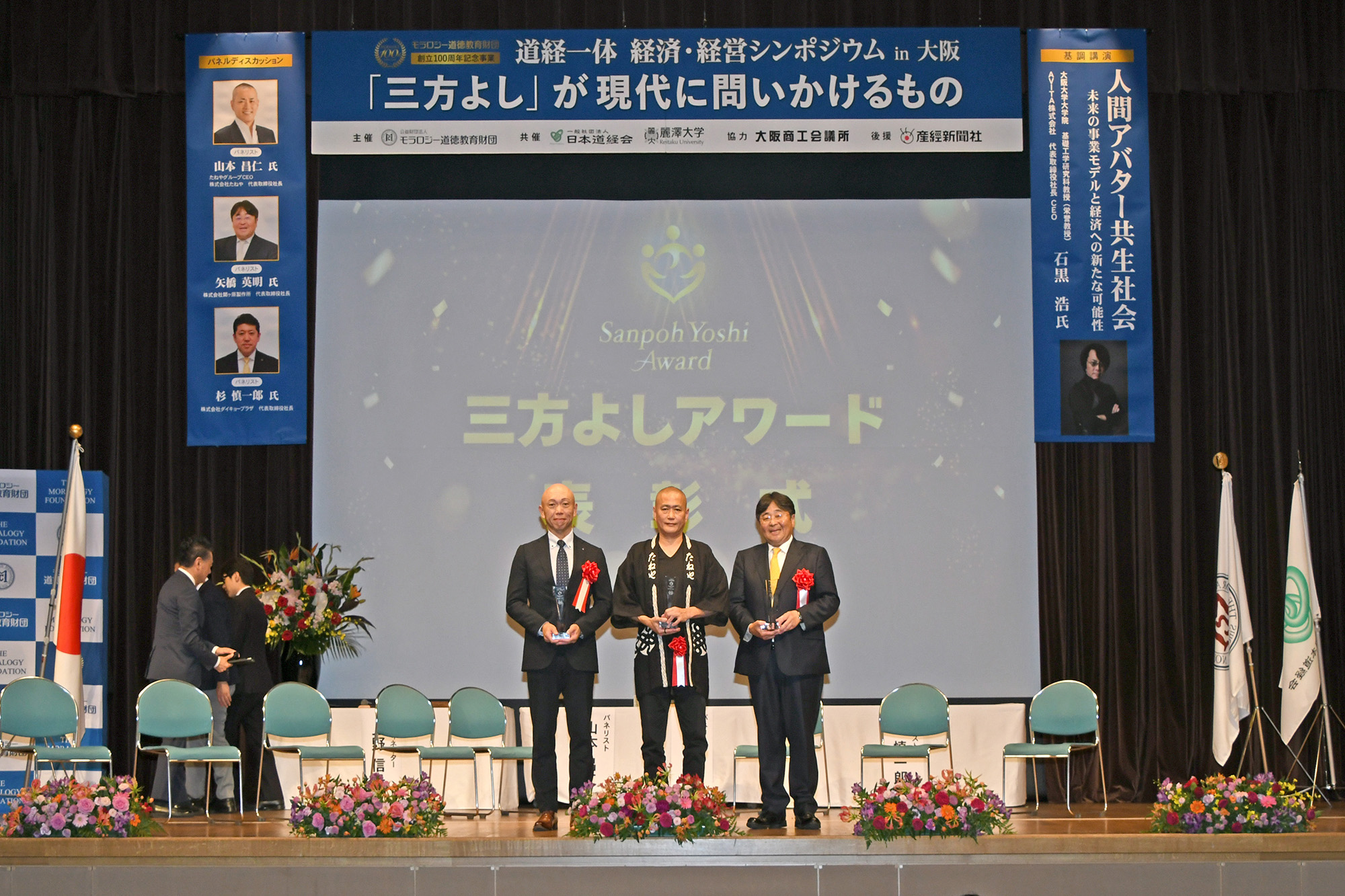
Following the keynote address, the “Sanpō Yoshi Award Ceremony” was held. As a collaborative initiative among Nihon Dohkei kai, Reitaku University, and The Moralogy Foundation, awards were presented to three companies that practice ethical and sustainable management based on the spirit of “Benefit for All Three Parties Involved”—benefit for oneself, benefit for others, and benefit for society.
Akihito Kondo (Director of Nihon Dohkei kai and Dean of the School of Business Administration at Reitaku University), who delivered the overall evaluation of the judging process, explained that the selection focused not only on business performance but also on how companies harmonize morality and economics, as well as altruism and profit.
He stated that the evaluation was based on four criteria: “sincere practices toward stakeholders,” “people-centered management,” “financial soundness,” and “contributions to well-being.”
He praised the award recipients, saying:
“The way these companies have put their respective philosophies into practice in their daily management and built trust and credibility over many years is truly an embodiment of management that nurtures people and benefits society.”
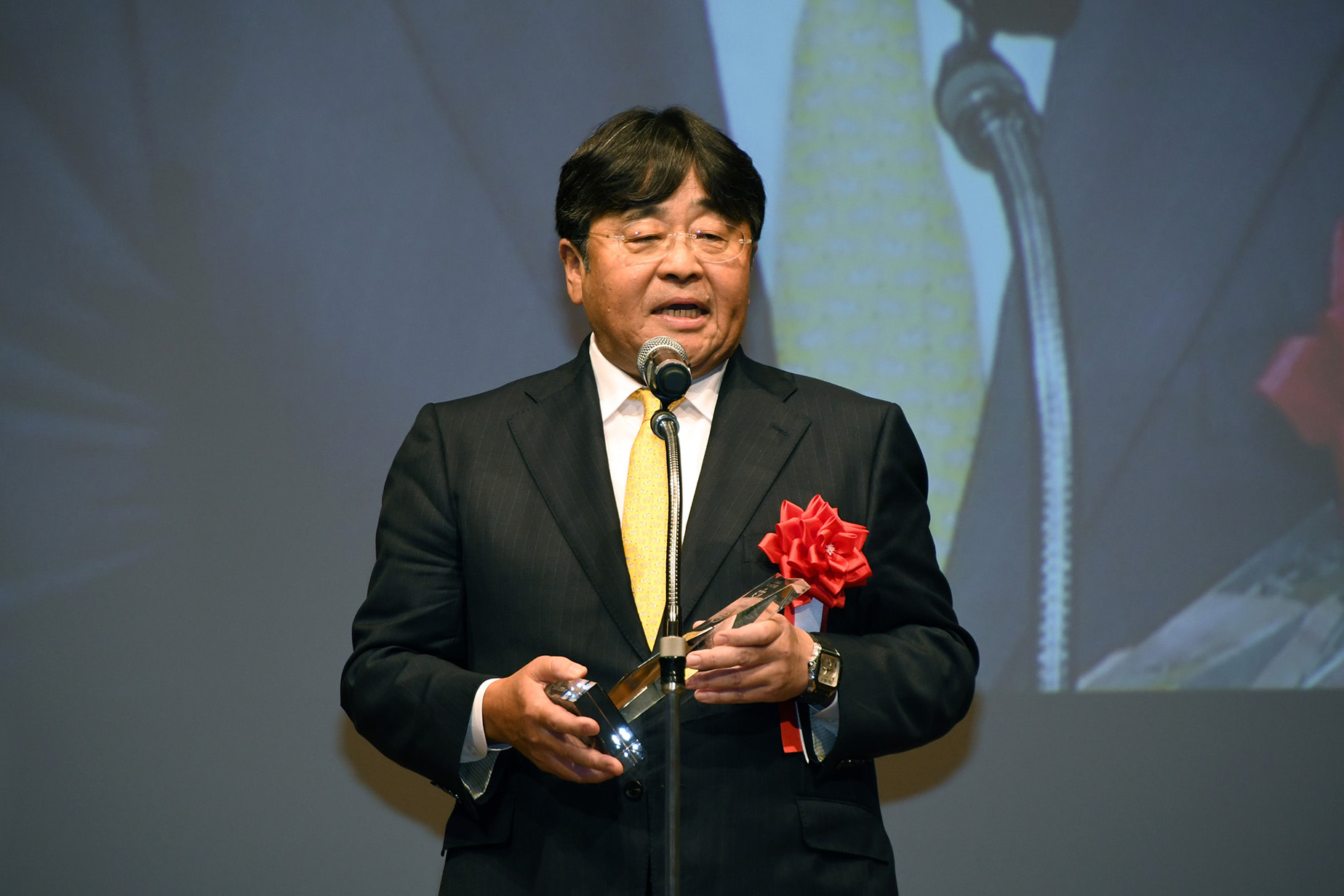
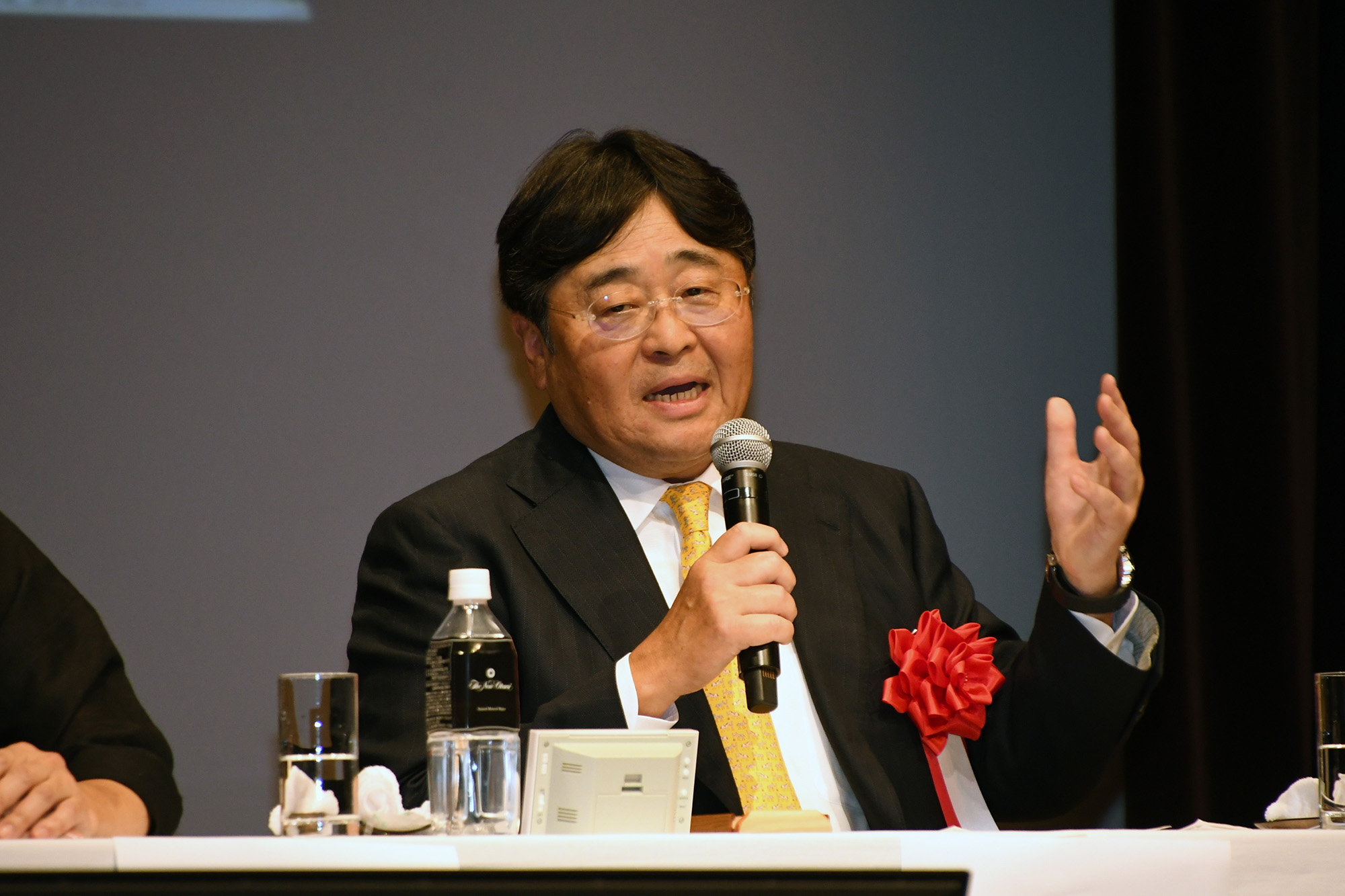
Following this, certificates of commendation and commemorative trophies were presented to representatives of each award-winning company.
Sanpō Yoshi Global Award: Ishida Co., Ltd. (Speaker: Yoshio Iwasaki, Executive Officer)
With a history spanning more than 130 years, Ishida Co., Ltd. has earned trust in over 100 countries through technologies that support the global food infrastructure.
The company was highly recognized for its efforts to instill the spirit of “Sanpō Yoshi” among employees worldwide and contribute to the realization of a sustainable society.
Mr. Iwasaki expressed his gratitude, stating:
“I am grateful that this award reflects the result of employees around the world embracing the spirit of ‘Sanpō Yoshi’ and putting it into practice. Moving forward, we will continue working together as one company to strive even harder and live up to this honor.”
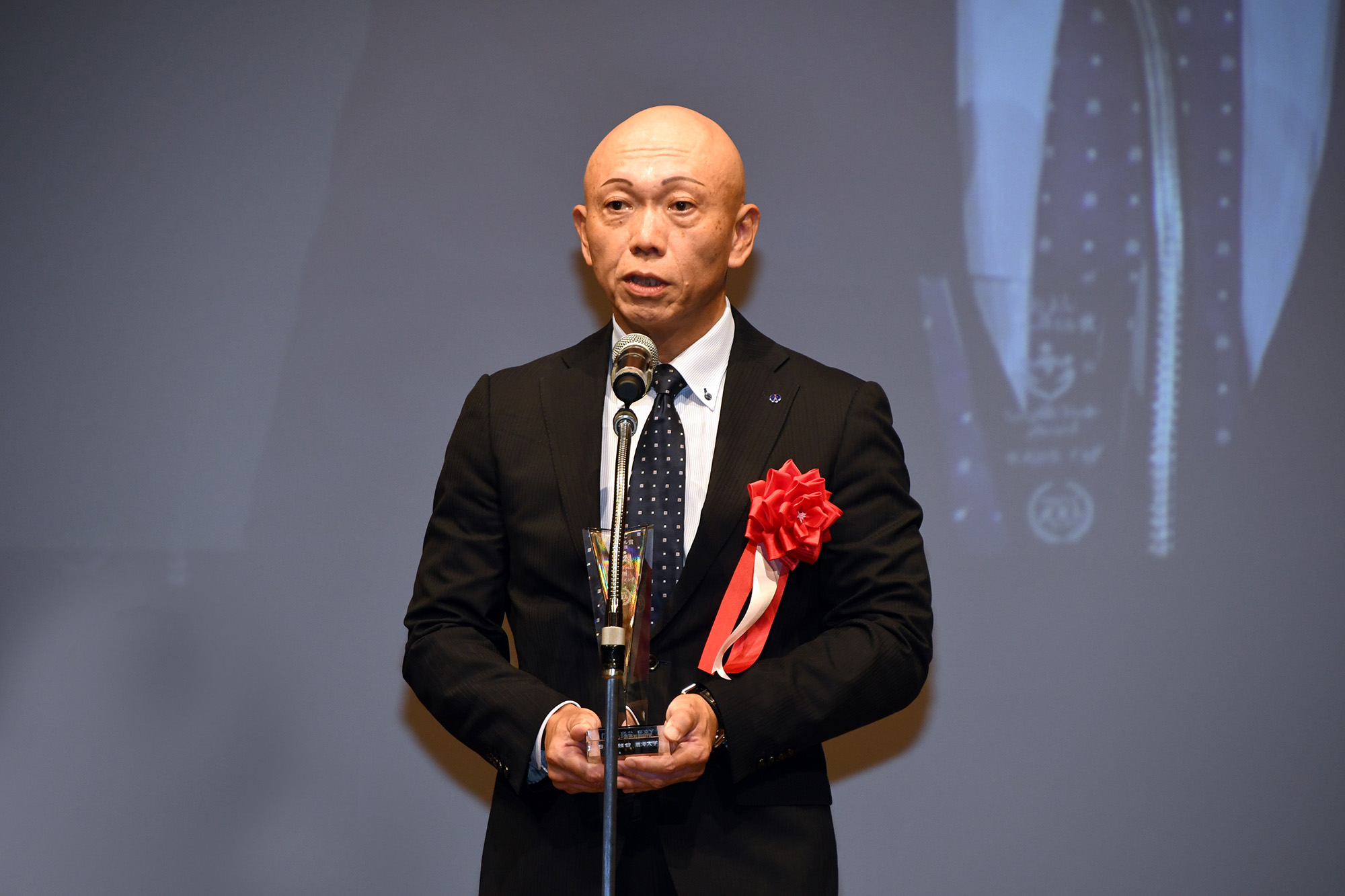
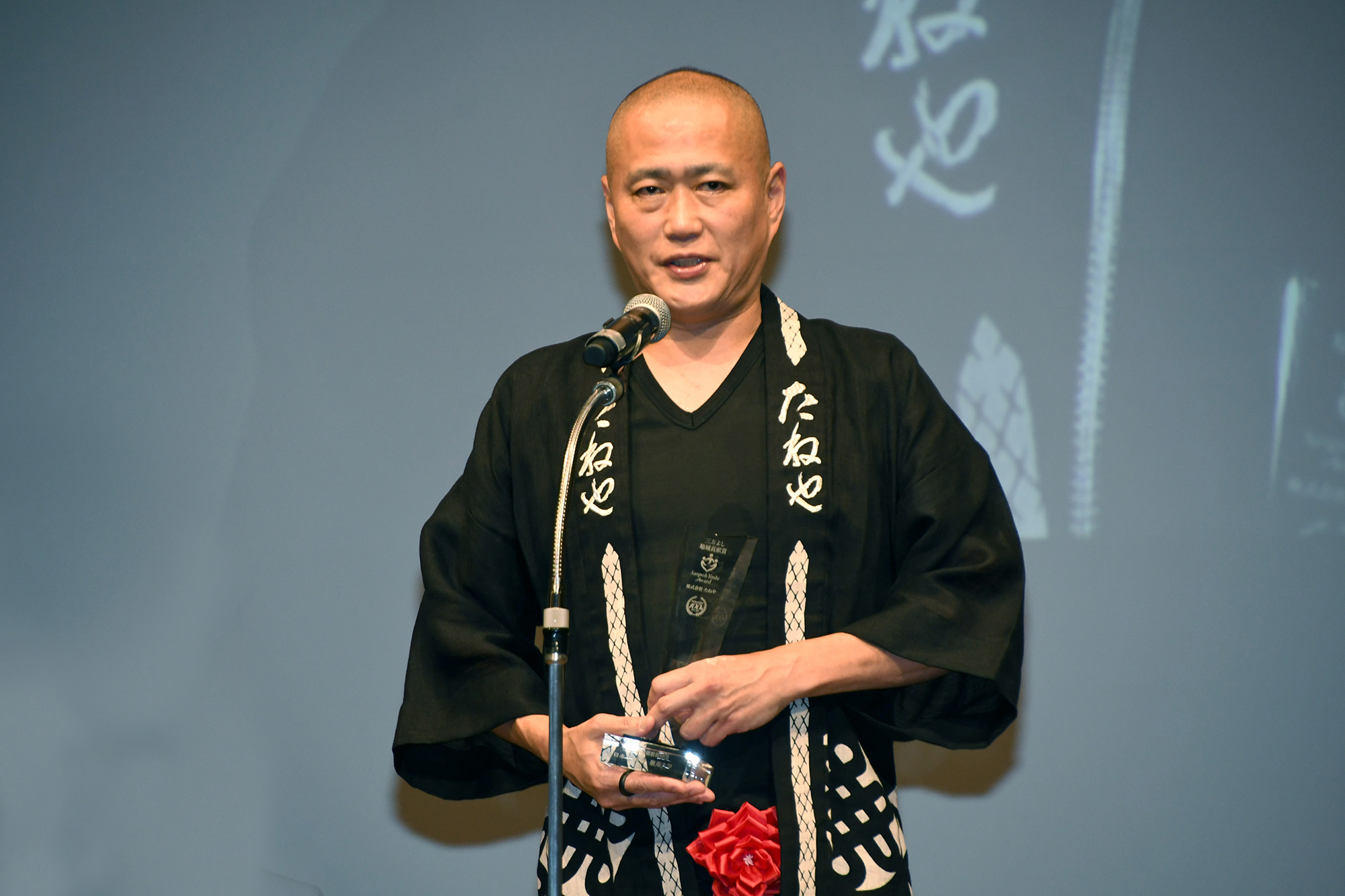
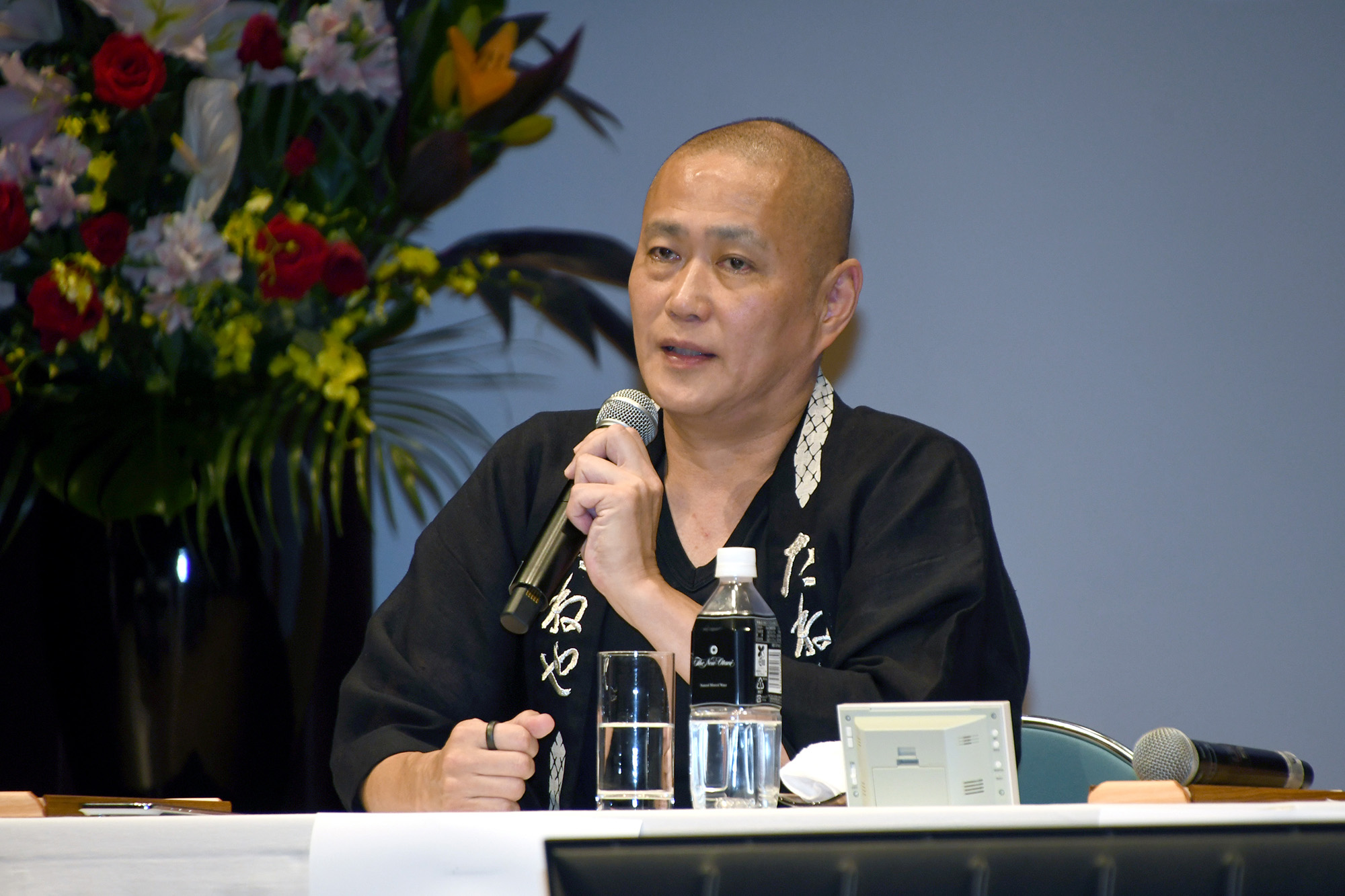
Sanpō Yoshi Community Contribution Award: Taneya Co., Ltd. (Speaker: Masahito Yamamoto, President and CEO)
Guided by the Omi merchants’ philosophy of “Sanpō Yoshi” and the principle of “learning from nature,” Taneya Co., Ltd. was highly recognized for its environmentally regenerative and sustainable management practices, which connect tradition and nature to the future through initiatives such as La Collina Omihachiman, which attracts approximately two million visitors annually, and its new store LAGO Otsu on the shores of Lake Biwa.
Mr. Yamamoto expressed his aspirations:
“It is thanks to the community that we are where we are today. With joy and gratitude in our hearts, we will continue to learn from nature and strive to create confectionery products that harmonize with the local environment.”
Sanpō Yoshi Human Resource Development Award: Sekigahara Seisakusho Co., Ltd. (Speaker: Hideaki Yabashi, President and CEO)
Guided by the philosophy “Seeking an Endless Human Community,” Sekigahara Seisakusho Co., Ltd. develops customized manufacturing solutions for ultra-large and ultra-high-precision products.
The company was highly recognized for its practice of holistic human resource development through initiatives such as “Learning Halls,” “Technology Villages,” and “Culture Villages.”
Mr. Yabashi expressed his determination:
“Carrying on the founding spirit that ‘the company belongs to everyone,’ we will place ‘employee happiness’ as our highest priority, contribute to society through our one-of-a-kind technologies, and strive to become a company that lasts for 100 years.”
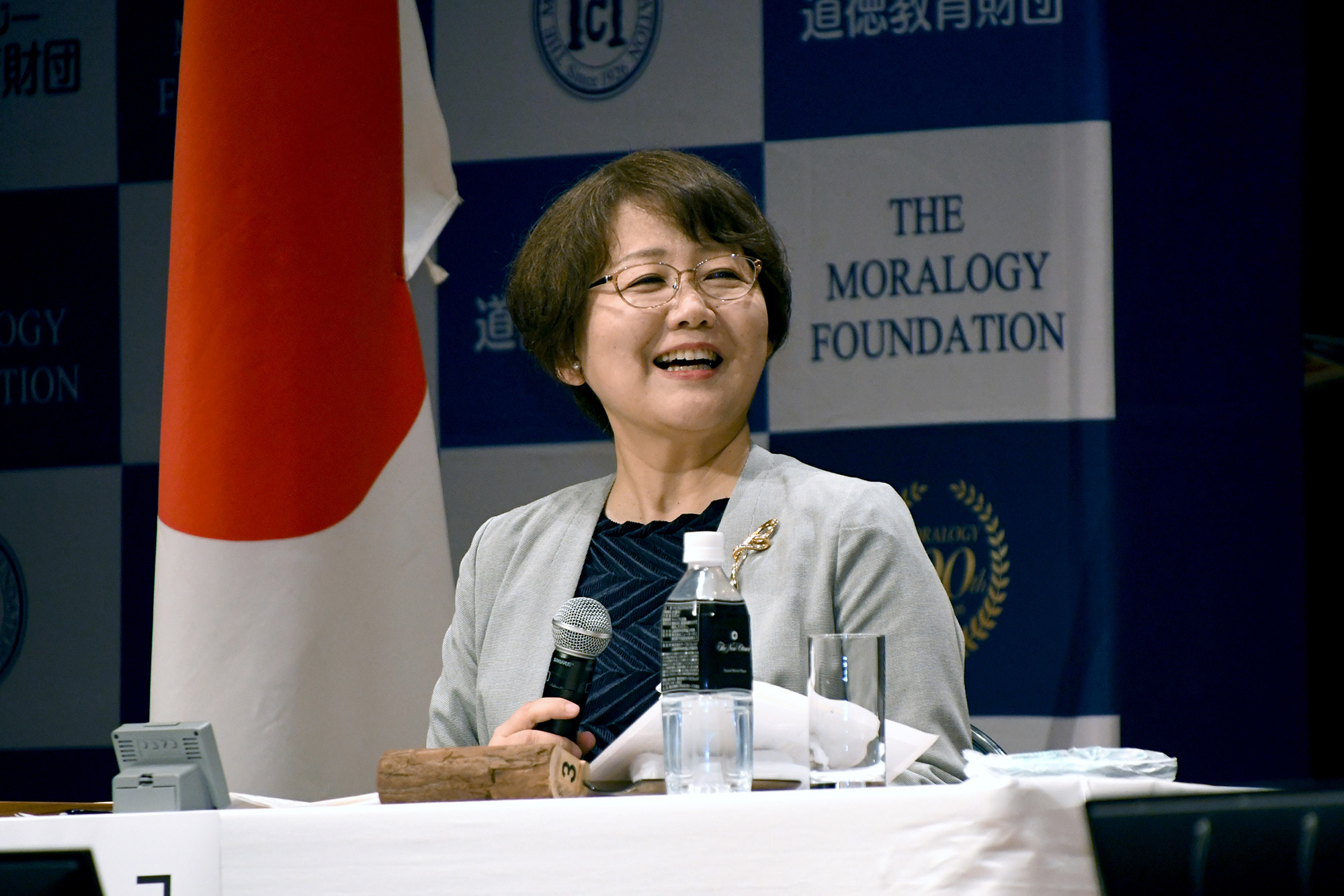
In the panel discussion that followed, Ms. Nobuko Ueno, Executive Officer of Jato Co., Ltd., served as moderator.
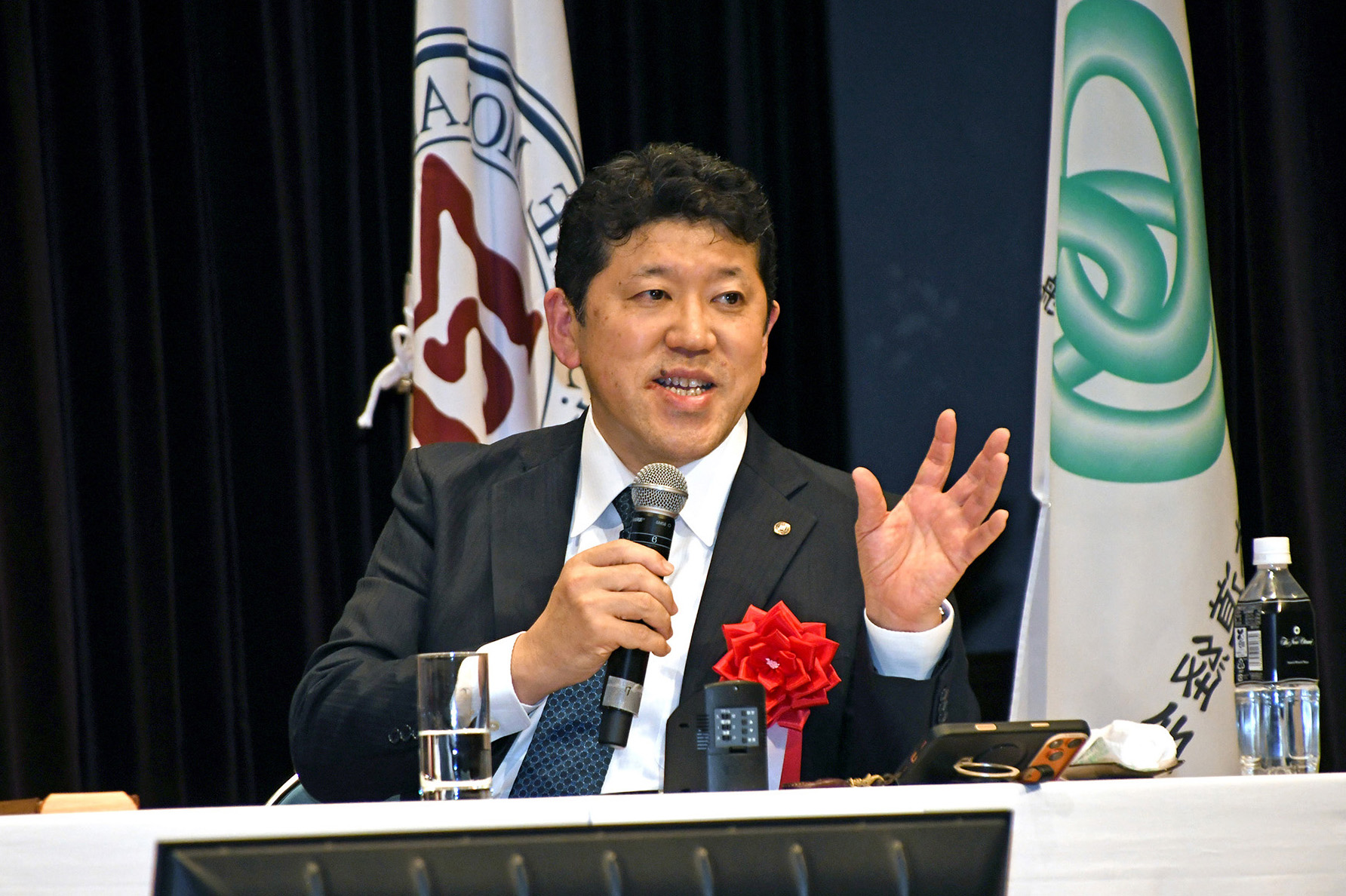
The panelists included Mr. Masahito Yamamoto, President and CEO of Taneya Co., Ltd.; Mr. Hideaki Yabashi, President and CEO of Sekigahara Seisakusho Co., Ltd.; and Mr. Shinichiro Sugi, President and CEO of Daikyo Plaza Co., Ltd.
Under the themes of “Women’s Empowerment,” “Human Resource Development,” and “Toward the Future,” the panelists shared concrete examples of their management practices, including approaches that maximize the individuality of diverse human resources, corporate management in which every employee takes an active role through delegation of authority, and the creation of stores based on the principles of “The Unity of Morality and the Economy,” where customers’ happiness becomes the happiness of employees.
In today’s rapidly advancing technological era, the panel demonstrated through real-world examples the importance of people-centered management, and the passionate discussion received enthusiastic applause from the audience.
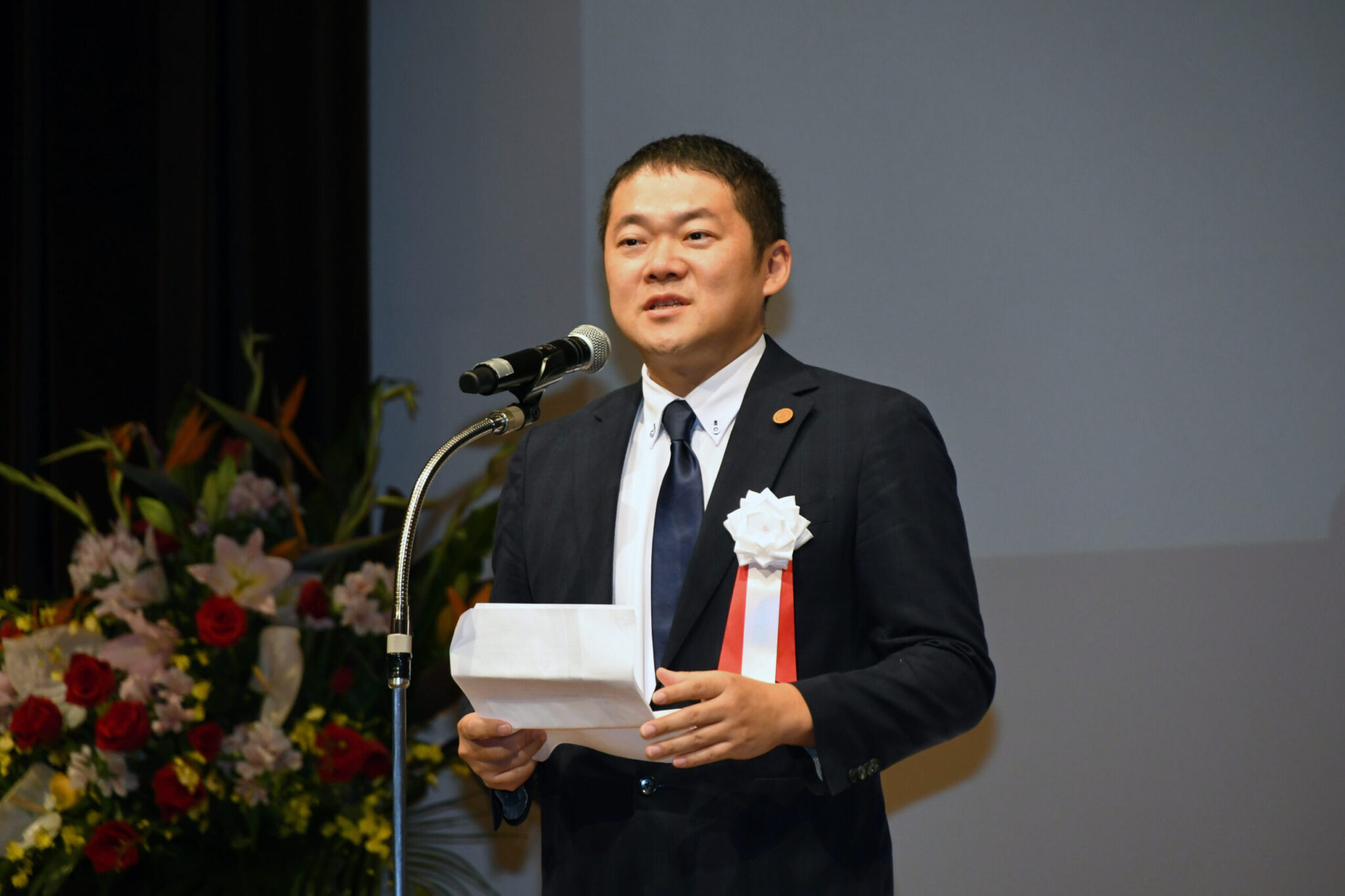
Finally, Yoshikazu Hiroike, Chair of the 100th Anniversary Commemorative Committee, took the stage to deliver the closing remarks.
He expressed his gratitude and aspirations, stating:
“What Sanpō Yoshi asks of the modern world is practical wisdom that will remain indispensable in the years to come. With the continued support and cooperation of many people, we hope to pass the baton inherited from our predecessors on to the next 100 years.”
With these words, the symposium came to a successful close.
Following the symposium, a reception was held, providing an opportunity for speakers and participants to engage in lively interaction and exchange views.